Buying a beauty device is not just a matter of comparing prices, features, or polished product photos. A reliable buyer examines the paperwork behind the equipment. The real question is: what certifications should beauty equipment have before it enters a salon, clinic, or treatment room? The answer depends on the device type, destination market, and intended use. A professional laser, LED mask, radio-frequency machine, and facial steamer may require different evidence.
This guide introduces seven certifications and compliance marks buyers should examine carefully. These may include CE marking, FDA clearance or registration where applicable, ISO 13485 manufacturing systems, IEC electrical safety testing, EMC compliance, RoHS, and UKCA requirements. Certification names alone are not enough. Buyers should check the certificate number, issuing body, product model, manufacturer name, and validity date. Look closely.
A dependable supplier should also provide user instructions, maintenance guidance, warranty terms, and traceable serial numbers. In my experience, small details often reveal larger quality problems. A missing test report can matter more than an impressive demonstration. However, certification rules are not identical worldwide, and some marks apply only to specific risks or markets. This guide will not pretend that one certificate guarantees perfect performance. Buyers still need independent verification, trained operators, and realistic claims about treatment results. That extra caution may feel slow, but it protects clients, staff, budgets, and brand reputation.
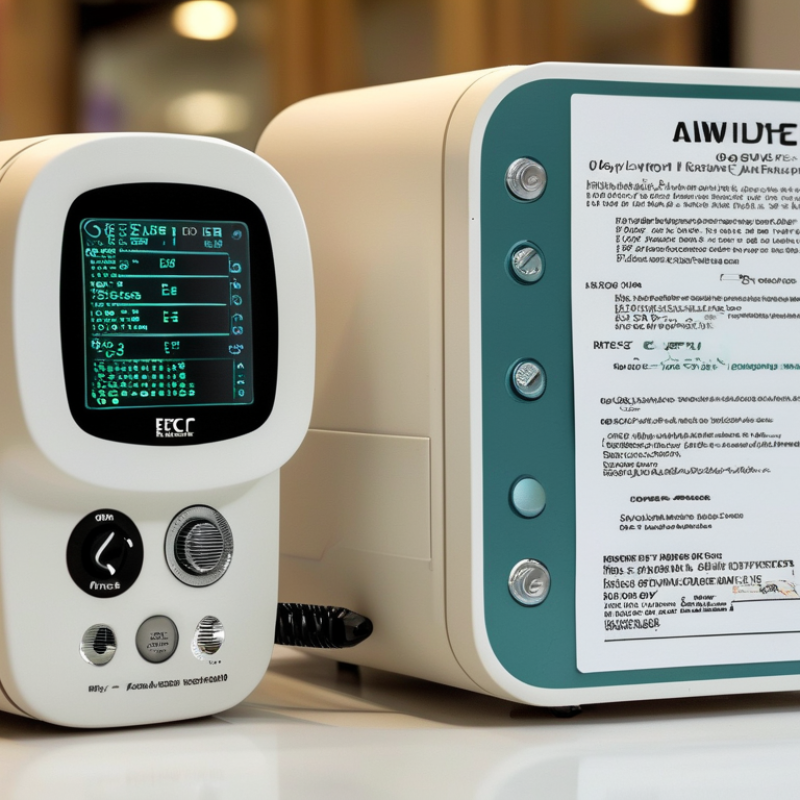
Beauty equipment certifications are evidence, not decorative seals. They show how a device was tested, documented, and monitored. The seven useful areas include CE marking, FDA authorization, ISO 13485, IEC 60601-1, IEC 62366-1, RoHS compliance, and electrical safety approval. Their meaning differs. ISO 13485 evaluates quality systems, while IEC 60601-1 addresses electrical safety. FDA registration alone does not prove product clearance. That distinction matters.
The Global Wellness Institute valued the global wellness economy at $6.3 trillion in 2023. More spending also brings more buyer scrutiny. The FDA’s MAUDE database contained over two million medical-device report entries in 2023. These figures do not prove every report involved cosmetic equipment. They do show why traceable safety records deserve attention.
Buyers should request the certificate number, issuing body, scope, expiry date, and matching model number. A certificate for one handpiece may not cover the full system.
A practical inspection includes the user manual, risk assessment, service history, and electrical test results. Look for instructions on skin contact, heat, light exposure, and emergency shutoff.
Ask whether the certificate covers the exact production version. Certificates can age. Suppliers may also present laboratory reports as certifications, which is confusing.
One imperfect habit is trusting a familiar logo too quickly. Verification through the issuing authority is slower, but far more reliable.
Seven checks matter when buyers assess beauty equipment. From hands-on purchasing reviews, the certificate alone never tells the whole story. Ask whether it covers the exact model, intended use, and manufacturing site. A document for a similar device is not enough.
The seven key certifications buyers should know include ISO 13485, which supports medical-device quality management. CE marking under the EU Medical Device Regulation may apply to equipment with medical claims. FDA 510(k) clearance can matter for certain devices sold in the United States. UKCA requirements may apply in Great Britain, but current rules need confirmation. IEC 60601-1 addresses electrical safety for applicable professional equipment. IEC 60825-1 is important for laser-based devices. RoHS limits certain hazardous substances in electrical products.
Look closely at certificate numbers, issuing bodies, expiry dates, and product names. Also request test reports, user instructions, and maintenance records. Real-world reliability depends on more than paperwork. A device may pass electrical testing but still feel awkward during daily treatment. That detail is easy to miss. Buyers should check emergency controls, cooling performance, handpiece weight, and cleaning access. I have seen impressive documents fail to answer basic service questions. Certification is valuable evidence, not a substitute for careful evaluation.
Compare the main safety, quality, market-access, and compliance areas covered by seven important certification or regulatory evidence types. The score counts the primary verification areas addressed; it is not a ranking of certification quality.
Buyers should request current certificates, test reports, declarations, and product-specific documentation. Requirements vary by device type, intended use, materials, and sales market.
Certification choices should match the equipment’s energy, contact method, and clinical risk. Laser and IPL systems need electrical safety testing under IEC 60601-1 and electromagnetic compatibility testing under IEC 60601-1-2. Buyers should also verify laser-specific safety documentation, operator training, and applicable market authorization. A certificate alone cannot prove safe treatment.
Radiofrequency, ultrasound, and LED devices require different evidence. RF equipment should show tested output limits, temperature controls, and skin-contact safety. Ultrasound systems need acoustic output data and transducer testing. LED systems should disclose wavelength accuracy, irradiance, eye protection, and photobiological safety. ISO 13485 certification indicates a controlled medical-device quality system, but it does not replace product testing or authorization. Small detail. Often missed.
For microneedling and other skin-penetrating equipment, buyers should inspect sterilization validation, biocompatibility evidence, and single-use component controls. Cryotherapy devices need temperature monitoring, pressure testing, and emergency shutoff verification. Equipment used near broken skin deserves stricter scrutiny. The World Health Organization links effective infection prevention with safer care delivery, making cleaning instructions and traceable maintenance essential. Fortune Business Insights valued the global medical aesthetics market at about 17.07 billion dollars in 2023, showing why documentation deserves attention as demand grows. Grand View Research also identifies energy-based treatments as a major market segment. Reports vary. That is a useful warning: compare test methods, certificate scope, issuing bodies, and expiration dates before purchasing.
A certificate is only useful when its scope matches the equipment. Ask for the exact model, manufacturing site, standard, issue date, and expiry date. For electrical beauty devices, check whether testing covers electrical safety, electromagnetic compatibility, and applied parts. IEC 60601-1 may matter when equipment is classified for medical use. ISO 13485 certification can support quality-system claims, but it does not certify every product.
Verify the certificate directly with the issuing organization. A searchable certificate number is stronger than a scanned logo. Check the legal manufacturer, approved scope, audit status, and any suspension notice. The ISO Survey 2023 recorded more than one million ISO management-system certificates worldwide, so an ISO symbol alone proves very little. It needs context. Request the declaration of conformity, test report, risk assessment, user manual, and calibration records. Dates should align across every document.
FDA fiscal-year 2023 safety data contained more than one million medical-device reports, showing why traceability deserves attention. However, a report is not proof that every beauty device is unsafe. It signals the value of post-market controls. I would also compare certificate wording against the actual handpiece, power rating, and intended use. Small mismatches can reveal recycled paperwork. This check is sometimes overlooked. An honest limitation remains: online verification may confirm a document, but not the equipment’s condition, installation, or operator training. Ask for recent surveillance evidence, then inspect the unit before purchase.
| No. | Certification, Mark, or Standard | What It Indicates | Most Relevant Equipment | Documents Buyers Should Request | How to Verify the Claim | Important Limitation |
|---|---|---|---|---|---|---|
| 1 | CE Marking European Economic Area market access |
The manufacturer declares that the product meets the applicable European Union health, safety, and environmental requirements. | Electrical beauty devices, light-based systems, laser equipment, and products classified as medical devices in the intended market. | EU Declaration of Conformity, technical documentation summary, risk-management evidence, applicable test reports, and notified-body certificate when third-party assessment is legally required. | Check that the declaration identifies the exact model, manufacturer, applicable legislation, harmonized standards, authorized signatory, and issue date. Confirm any notified-body identification number in the official EU database where applicable. | CE is not always a third-party safety certification. Some products may use self-declaration. |
| 2 | UKCA Marking Great Britain market access |
The manufacturer declares conformity with applicable Great Britain product-safety requirements. | Electrical beauty equipment and regulated products intended for England, Scotland, or Wales. | UK Declaration of Conformity, relevant test reports, technical file references, instructions for use, and an approved-body certificate where required. | Verify the model number, applicable UK regulations, responsible economic operator, signature, and date. Confirm the approved body and certificate scope when third-party assessment applies. | UKCA requirements differ by product category and destination. Northern Ireland may follow separate rules for certain products. |
| 3 | ISO 13485:2016 Medical-device quality management system |
The organization operates a quality-management system designed for the regulatory and lifecycle needs of medical devices. | Professional-use devices that diagnose, treat, reduce, or prevent a medical condition, depending on the product’s intended purpose and jurisdiction. | Current ISO 13485 certificate, certificate scope, covered manufacturing sites, validity dates, audit status, and evidence that the certificate applies to the relevant product category. | Check the issuing certification body’s certificate directory or contact the body directly. Compare the legal manufacturer, site address, scope, standard edition, and expiration date. | It certifies the quality system, not automatic safety or performance of every individual product. |
| 4 | IEC 60601-1 Compliance Basic safety and essential performance |
The electrical medical equipment has been evaluated against requirements for basic electrical, mechanical, thermal, and functional safety. | Powered devices used in professional or medical environments, including energy-based skin-treatment systems. | IEC 60601-1 test report or certification record, product model list, applicable national deviations, and reports for relevant collateral or particular standards. | Confirm the report is issued by a technically competent testing or certification organization, covers the exact model and power configuration, and identifies the tested standard edition. | Compliance with the general standard may not cover laser, optical, software, EMC, or other product-specific requirements. |
| 5 | IEC 60601-1-2 Compliance Electromagnetic compatibility |
The equipment has been assessed for electromagnetic emissions and immunity so that it does not create unacceptable interference or fail under expected electromagnetic disturbances. | Electronic beauty and aesthetic devices used near other medical, laboratory, or communications equipment. | EMC test report, test configuration, operating modes, cable and accessory list, limits used, and any applicable national or regional deviations. | Ensure the test report covers the exact model, accessories, operating modes, and intended environment. Review both emissions and immunity results rather than accepting a generic “EMC passed” statement. | EMC compliance does not replace electrical-safety, laser-safety, biocompatibility, or regulatory-market requirements. |
| 6 | ISO 14971:2019 Medical-device risk management |
The manufacturer has a process for identifying hazards, estimating and controlling risks, and monitoring risk throughout the product lifecycle. | Devices that use heat, light, laser energy, radiofrequency, electrical stimulation, suction, or other energy that may affect users or clients. | Risk-management plan or summary, hazard analysis, risk-control evidence, residual-risk evaluation, post-market monitoring process, and an ISO 13485 audit reference when available. | Ask how foreseeable misuse, burns, eye exposure, electrical shock, infection, and treatment-related risks are controlled. Verify that the risk documentation matches the exact intended use. | Risk management does not prove that a device is legally authorized for a specific medical or cosmetic claim. |
| 7 | IEC 60825-1 or Applicable Laser-Safety Standard Classification and laser safety |
The laser product has been evaluated for accessible laser radiation and assigned a safety classification with corresponding labeling and control requirements. | Laser hair-removal, skin-resurfacing, pigment-treatment, and other laser-based aesthetic equipment. | Laser classification report, wavelength and output-power data, safety features, warning labels, user manual, protective-eyewear specifications, and service or calibration records. | Match the wavelength, pulse characteristics, output limits, and model number in the report to the actual device. Confirm that eyewear is suitable for the stated wavelength and optical-density range. | A laser-safety classification is not the same as approval for a therapeutic claim or permission for unlicensed operation. |
When comparing beauty equipment suppliers, check seven credentials: ISO 13485, ISO 9001, IEC 60601-1, IEC 60601-1-2, ISO 14971, IEC 60825-1, and valid market-access documentation. ISO 13485 shows controlled medical-device processes, while ISO 9001 supports broader quality management. IEC 60601-1 addresses electrical safety, and IEC 60601-1-2 covers electromagnetic compatibility. For laser systems, IEC 60825-1 is especially relevant. ISO 14971 indicates structured risk management.
Look beyond framed certificates. Ask for the certificate number, issuing body, scope, expiry date, and audited manufacturing address. The scope should mention the actual equipment category, not only “general products.” Request test reports, calibration records, software validation evidence, and maintenance procedures. A supplier that answers slowly may still sell reliable equipment, but unclear documents create avoidable risk. Check twice.
The 2023 ISO Survey reports more than one million ISO 9001 certificates worldwide, so certification alone cannot separate excellent suppliers from average ones. It proves a system was assessed, not that every device performs perfectly. Grand View Research valued the global medical aesthetics market at approximately 19.4 billion dollars in 2023, showing why supplier claims deserve careful verification. In my experience, a live demonstration reveals details certificates miss: uneven handpiece cooling, confusing controls, or missing emergency instructions. Ask who trains operators, how faults are recorded, and whether replacement parts remain available. A checklist is useful. It is not infallible.
Certifications show how equipment was tested, documented, and monitored. They do not guarantee perfect performance. The details matter.
No. It evaluates the manufacturer’s quality processes, not every individual product. Check the exact model and production version.
Request the certificate number, issuing body, scope, expiry date, manufacturing site, and matching model number. Dates should align.
A certificate covering one handpiece may not cover the complete system. Compare the model, power rating, attachments, and intended use.
Search the certificate number through the issuing organization. Confirm its scope, audit status, expiry date, and suspension notices. A logo is weak evidence.
Ask for electrical test results, electromagnetic compatibility reports, risk assessments, user manuals, and calibration records. Check emergency shutoff instructions.
Inspect skin-contact instructions, heat controls, light exposure guidance, and service history. A live demonstration may reveal uneven cooling or confusing controls.
No. Registration may identify a device or supplier, but it does not prove product clearance. That distinction matters.
Ask who trains operators, how faults are recorded, and whether replacement parts remain available. Unclear support creates avoidable risk.
Not always. Certification proves that a system was assessed, not that every device performs perfectly. A checklist helps, but it is not infallible.
Choosing reliable beauty equipment starts with understanding what certifications mean and why they matter. Certifications can indicate that a device has been assessed for safety, quality, performance, electrical protection, or manufacturing consistency. Buyers should ask, “what certifications should beauty equipment have” based on the equipment’s function, intended market, and level of user contact. Common certification categories may include electrical safety, electromagnetic compatibility, quality management, material safety, and relevant device-specific testing.
Certification requirements can vary for skincare, hair-removal, body-contouring, and other professional equipment, so documentation should match the product type rather than rely on general claims. Before comparing suppliers, buyers should request certificates, test reports, issuing-body details, product model numbers, validity dates, and manufacturing information. They should also confirm that the documents are genuine, current, and applicable to the exact equipment offered. A careful review of certification records, warranty terms, technical support, training, and after-sales service can help buyers select safer, more dependable equipment and avoid misleading or incomplete compliance claims.

Nova Beauty